If you have seen our TCM Costco Edit on Instagram, you know that a Costco trip can look very different through the lens of Traditional Chinese Medicine.
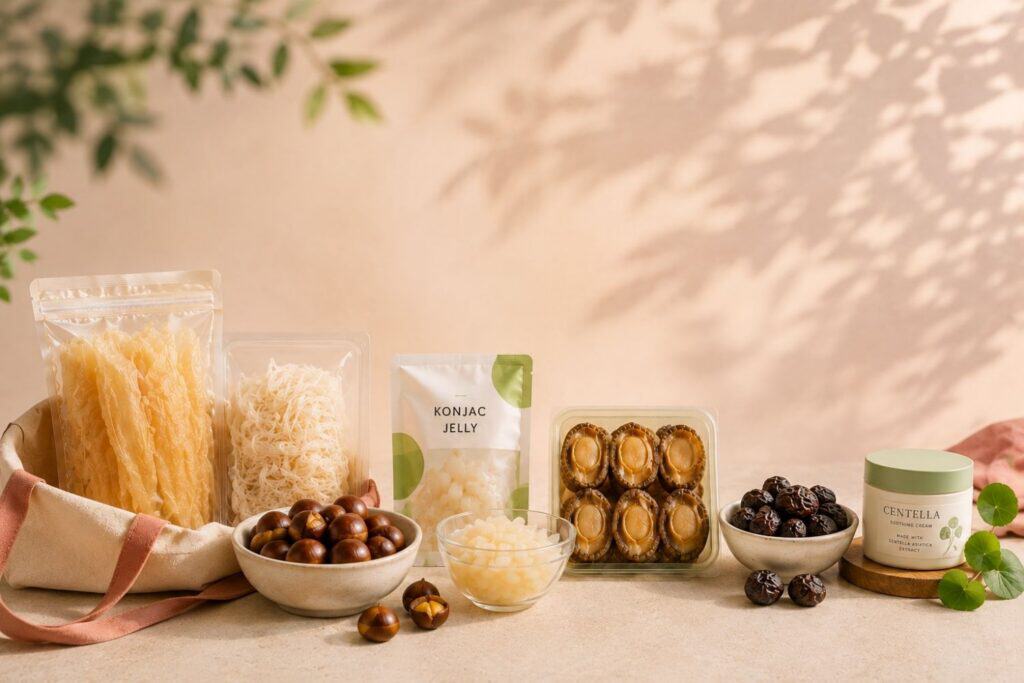
We found seven products worth discussing: fish maw, bird’s nest, konjac jelly, braised abalone, chestnuts, dried plums, and Centella cream. Several of these foods have been part of Chinese dietary traditions for generations. Others combine an ingredient familiar within traditional medicine with modern nutrition or skincare.
So, what do these Costco finds actually do? What do terms such as Kidney Yin and Lung Yin mean? What can you buy instead if Costco does not carry them? Here is a closer look at every item from our post, including practical alternatives and other places to find them.
What Are the Best TCM-Inspired Health Products at Costco?
The seven products featured in our Costco post have different traditional uses. Some are associated with nourishing Yin or Yang, while others are traditionally used in relation to digestion, fluids, or skin health.
Here is the quick version:
| Costco find | Traditional Chinese Medicine perspective | Easy alternative |
| Fish maw, Yu Jiao | Traditionally associated with nourishing Kidney Yin | Fish, eggs, slow-cooked meats |
| Bird’s nest, Yan Wo | Traditionally used to nourish Lung Yin and support skin vitality | Tremella mushroom, pears |
| Konjac jelly, Ju Ruo | Traditionally associated with Dampness and digestive health | Konjac noodles, fiber-rich foods |
| Braised abalone, Bao Yu | Traditionally associated with nourishing Liver Yin | Oysters, mussels, clams |
| Chestnuts, Li Zi | Traditionally associated with Kidney Yang and lower back support | Walnuts, black beans, root vegetables |
| Dried plums, Wu Mei | Traditionally used to generate fluids and support digestion | Plums, prunes |
| Centella cream, Ji Xue Cao | Used in modern skincare for skin barrier and collagen support | Cica or Centella skincare |
These alternatives are not exact TCM substitutes. They are practical options that may share certain culinary, nutritional, or skincare qualities.
How Does Traditional Chinese Medicine Use Food for Health?
Traditional Chinese Medicine uses food as one part of an individualized approach to supporting health and addressing patterns of imbalance.
TCM dietary therapy considers characteristics beyond calories, vitamins, protein, fat, and carbohydrates. Foods can also be understood according to qualities such as:
- Warming or cooling
- Moistening or drying
- Nourishing Yin or Yang
- Supporting Qi or Blood
- Generating fluids
- Addressing patterns such as Dampness
This does not mean that everyone should eat the same foods.
If we identify signs of Yin deficiency in one patient and Dampness in another, their dietary recommendations may look very different.
What Is Fish Maw, and Why Is It Used in Traditional Chinese Medicine?
Fish maw, or Yu Jiao, is the dried swim bladder of certain fish. In Chinese dietary traditions, it is considered a deeply nourishing food and is commonly associated with supporting Yin.
Fish maw has a long culinary history, particularly in Cantonese cooking. It is usually soaked and then incorporated into soups or slow-cooked dishes. Fish maw is also naturally rich in collagen-containing connective tissue, which has contributed to growing interest in food outside of traditional Chinese cuisine.
What Can You Eat Instead of Fish Maw?
Fish maw is a specialty ingredient and can be expensive. More accessible options include:
- Fish
- Eggs
- Slow-cooked meats
- Broths made with connective tissue
These are not direct replacements from a TCM standpoint, but they can be easier ways to incorporate nutrient-dense protein into your diet.
Where Can You Buy Fish Maw Besides Costco?
Try:
- Chinese supermarkets
- Asian grocery stores
- Specialty seafood markets
- Chinese dried seafood stores
Asian markets may also carry several grades and varieties of fish maw, so prices can vary considerably.
What Is Bird’s Nest, and What Is It Used for in TCM?
Edible bird’s nest, or Yan Wo, is traditionally associated with nourishing Lung Yin and supporting moisture and skin vitality.
Bird’s nest has been consumed in China and other parts of Asia for generations. It is commonly served in soups, desserts, and lightly sweetened drinks. In TCM, it may be selected when a client needs to nourish Yin and address dryness.
What Is a Less Expensive Alternative to Bird’s Nest?
Tremella mushroom is one of the most practical alternatives to consider. Also called snow fungus or white fungus, tremella is commonly used in Chinese cooking and is considerably more affordable than edible bird’s nest.
Other foods traditionally associated with moistening qualities include:
- Asian pears
- Regular pears
- Tremella mushroom
- Honey, when appropriate for the individual
Dried tremella is widely available at Chinese and other Asian supermarkets.
Is Konjac Jelly Good for Gut Health?
Konjac contains glucomannan, a type of soluble dietary fiber, which is one reason konjac products are often associated with digestive health.
In TCM, konjac may also be discussed in relation to Dampness. Depending on the individual, a Dampness pattern may be associated with symptoms such as digestive sluggishness or a sensation of heaviness.
What Should You Look for When Buying Konjac Jelly?
Not every package of konjac jelly has the same nutritional profile.
Before buying one, check:
- Added sugar
- Serving size
- Total carbohydrates
- Fiber content
- Sweeteners
- Other added ingredients
What Are Good Alternatives to Konjac Jelly?
If you want konjac without the jelly format, look for:
- Konjac noodles
- Shirataki noodles
If your primary goal is simply to eat more fiber, everyday alternatives include:
- Beans
- Oats
- Chia seeds
- Vegetables
- Fruit
- Whole grains
What Is Abalone Used for in Traditional Chinese Medicine?
Abalone, or Bao Yu, is traditionally considered a nourishing food and may be used in Chinese dietary therapy when supporting Yin is appropriate.
In our Costco post, we highlighted braised abalone in relation to Liver Yin deficiency. Liver Yin deficiency is a specific TCM pattern. It does not automatically mean someone has liver disease or impaired liver function.
What Can You Eat Instead of Abalone?
Abalone can be expensive, so it does not need to become a regular grocery purchase.
More accessible shellfish options include:
- Oysters
- Mussels
- Clams
They are not identical to abalone within Chinese dietary therapy, but they can provide high-quality protein and important micronutrients.
Where Can You Buy Abalone Besides Costco?
Look for abalone at:
- Asian supermarkets
- Chinese grocery stores
- Specialty seafood markets
Depending on the store, it may be available fresh, frozen, canned, dried, or prepared.
What Are Chestnuts Used for in Traditional Chinese Medicine?
Chestnuts, or Li Zi, are traditionally associated with the Kidney system and are often discussed in relation to Kidney Yang and lower back support.
In TCM, the Kidney system has a broader meaning than the anatomical kidneys. References to Kidney Yang should not be interpreted as claims about kidney function or kidney disease.
Chestnuts are also nutritionally different from many other nuts. They contain more carbohydrates and considerably less fat than foods such as almonds and walnuts.
What Can You Eat Instead of Chestnuts?
Depending on your nutritional needs, other nourishing foods to consider include:
- Walnuts
- Black beans
- Sweet potatoes
- Winter squash
- Other cooked root vegetables
Vacuum-packed and roasted chestnuts are also commonly available at Asian grocery stores when fresh chestnuts are out of season.
What Are Dried Plums, or Wu Mei, Used for in TCM?
Wu Mei is traditionally associated with generating fluids and supporting digestion. Its distinctive sour quality is significant within Traditional Chinese Medicine, where tastes are considered part of a food or herb’s healing properties.
There is an important shopping distinction here.
The dried plum snacks sold at Costco or conventional grocery stores are not necessarily the same preparation as Wu Mei used within Chinese herbal medicine.
Are Prunes the Same as Wu Mei?
No. Prunes and Wu Mei are different products.
For general dietary use, you might consider:
- Fresh plums
- Prunes
- Other tart fruits
If you are specifically looking for Wu Mei, look for it at a reputable Chinese herbal pharmacy rather than assuming any dried plum is interchangeable.
What Is Centella Cream, and What Does It Do for Your Skin?
Centella asiatica is a plant commonly used in modern skincare products intended to soothe the skin and support the skin barrier.
You may see it called:
- Centella asiatica
- Cica
- Ji Xue Cao
- Gotu kola
Centella contains compounds that have attracted scientific interest for their potential roles in wound healing, inflammation, collagen synthesis, and skin barrier support.
This makes Centella an interesting example of a plant with a history of traditional use that has become widely incorporated into modern skincare.
What Can You Buy Instead of the Costco Centella Cream?
You do not need the exact product from our Costco post.
Look at the ingredient list for:
- Centella asiatica
- Cica
- Madecassoside
- Madecassic acid
- Asiaticoside
You can find Centella products at Korean beauty stores, Asian beauty retailers, pharmacies, skincare stores, and online.
Remember that the entire formulation matters. A product containing Centella may also contain fragrances or other ingredients that are not appropriate for every skin type.
Where Can You Buy TCM Foods if Costco Does Not Have Them?
If Costco does not carry the TCM foods you’re looking for, try Asian supermarkets, Chinese grocery stores, specialty seafood markets, or Chinese herbal pharmacies. Costco inventory varies by warehouse, region, and season, so specialty Asian foods may not always be available.
Here’s where to look, along with a few things worth knowing before you buy:
| If you are looking for… | Try shopping at… | Note |
| Fish maw | Chinese supermarkets, dried seafood stores | Grades and prices vary widely |
| Bird’s nest | Chinese supermarkets, specialty Asian food stores | Often sold in small quantities |
| Tremella mushroom | Asian supermarkets, Chinese grocery stores | Usually sold dried |
| Konjac | Asian supermarkets, Japanese markets, many conventional grocery stores | Check the label for added sugar |
| Abalone | Asian supermarkets, seafood markets | Available fresh, frozen, canned, or dried |
| Chestnuts | Asian supermarkets, international grocery stores | Vacuum-packed works well off-season |
| Wu Mei | Chinese herbal pharmacies | Different from grocery-store dried plums |
| Centella skincare | Korean beauty stores, Asian beauty retailers, skincare stores | Check the full ingredient list |
Do You Need to Eat Specialty Chinese Foods to Follow a TCM Diet?
No. A Traditional Chinese Medicine diet does not require expensive or unusual ingredients.
Many familiar foods have a place within Chinese dietary therapy, including:
- Eggs
- Fish
- Chicken
- Rice
- Oats
- Beans
- Pears
- Berries
- Leafy greens
- Root vegetables
- Squash
- Nuts and seeds
- Soups and cooked vegetables
What matters is whether it is appropriate for the individual. That is one of the reasons we are cautious about universal lists of “best TCM foods.”
Should Everyone Eat Foods That Nourish Yin or Support Yang?
No. In Traditional Chinese Medicine, food recommendations depend on the individual’s pattern.
A food described as nourishing Yin is not automatically beneficial for everyone. The same is true for foods associated with Yang, Qi, Blood, Dampness, Heat, or other TCM concepts.
When we work with patients, we may consider factors such as:
- Digestion
- Appetite
- Energy
- Sleep
- Stress
- Menstrual cycles
- Temperature patterns
- Bowel habits
- Pregnancy
- Fertility treatment
- Current symptoms
- Overall health history
Two people can have the same Western medical diagnosis and receive different dietary recommendations because their TCM presentations are different.
How Is Chinese Dietary Therapy Used With Fertility Acupuncture?
Chinese dietary therapy may be used alongside fertility acupuncture to provide nutritional and lifestyle support during preconception and fertility treatment.
For example, dietary conversations may focus on:
- Eating consistently throughout the day
- Getting adequate protein and overall nutrition
- Supporting comfortable digestion
- Choosing foods appropriate for an identified TCM pattern
- Addressing individual symptoms
- Making nutrition manageable during IVF or other fertility treatment
For patients undergoing IUI or IVF, our recommendations are designed to complement the care provided by their reproductive endocrinologist and fertility team, not replace it.
Fertility acupuncture works the same way. Treatment is individualized rather than based on a standard set of acupuncture points for everyone trying to conceive.
Can Chinese Dietary Therapy Be Used During Pregnancy?
Chinese dietary therapy can be incorporated during pregnancy, but recommendations should account for the individual, the stage of pregnancy, nutritional needs, and food safety.
Pregnancy can also change what feels comfortable to eat.
Dietary discussions may need to account for:
- Nausea
- Changes in appetite
- Constipation
- Reflux
- Fatigue
- Food aversions
- Changes in digestion
Pregnancy is also a time to be particularly careful with herbs, supplements, and unfamiliar specialty foods. A product being described as “traditional” or “natural” does not automatically mean it is appropriate during pregnancy.
What Should You Actually Buy From the TCM Costco Edit?
There is no single product from this list that everyone needs.
Instead of filling your cart with every item, ask yourself:
- Do I actually enjoy this food?
- Does it fit into the way I normally eat?
- What is in the packaged product besides the featured ingredient?
- Am I buying it for general nutrition or because I am trying to address a specific health concern?
- If I am using it for a TCM purpose, is it actually appropriate for my pattern?
The purpose of our Costco post was not to create a required shopping list. It was to show that foods and ingredients with connections to Chinese medicine can be found in places you may already shop.
How Can Traditional Chinese Medicine Support Your Health?
Traditional Chinese Medicine works best when care reflects your symptoms, health history, and goals. At City Pulse Acupuncture in Oakland, we consider the full picture and integrate TCM with an understanding of Western medical care for fertility, pregnancy, women’s health, pain, and overall wellness.
If you’re interested in fertility acupuncture, prenatal acupuncture, or other services, schedule an appointment with us. We’ll take the time to understand what brings you in and create a thoughtful approach to care that can evolve with you.
Frequently Asked Questions About Costco Health Finds and Traditional Chinese Medicine
What Costco foods are used in Traditional Chinese Medicine?
Several foods found at Costco may also have a history of use in Chinese dietary traditions. Our TCM Costco Edit highlighted fish maw, bird’s nest, konjac, abalone, chestnuts, and dried plums, along with a Centella skincare product. Availability varies by Costco location.
What are the best Costco foods for a TCM diet?
There is no universal list of the best TCM foods because Traditional Chinese Medicine recommendations are individualized. A food traditionally used to nourish Yin, for example, may be appropriate for one person but unnecessary for another.
What is a cheaper alternative to edible bird’s nest?
Tremella mushroom, also known as snow fungus or white fungus, is a much more affordable ingredient used in Chinese cooking. Pears are another readily available food traditionally valued for their moistening qualities.
Where can I buy Chinese medicine foods besides Costco?
Asian supermarkets, Chinese grocery stores, specialty seafood markets, and Chinese herbal pharmacies are good places to look. For ingredients intended for a specific therapeutic purpose, talk with a qualified Traditional Chinese Medicine practitioner about the appropriate form and source.
Can Traditional Chinese Medicine foods improve fertility?
There is no single TCM food proven to improve fertility on its own. When we use Chinese medicine for fertility, dietary recommendations may be incorporated as one part of individualized care alongside fertility acupuncture, lifestyle support, appropriate nutrition, and Western fertility treatment when needed.
Are Kidney Yin and Liver Yin the same as kidney and liver health?
No. Kidney Yin, Kidney Yang, Liver Yin, and Lung Yin are concepts within the theoretical framework of Traditional Chinese Medicine. They should not be interpreted as diagnoses of kidney, liver, or lung disease in Western medicine.
Can I use these TCM foods while pregnant?
Some foods may be appropriate during pregnancy, while others may not be appropriate for a particular person or preparation. Food safety is especially important during pregnancy. If you are considering unfamiliar foods, herbs, or supplements, discuss them with the appropriate healthcare professionals. We can also consider individualized dietary guidance as part of prenatal acupuncture care.